
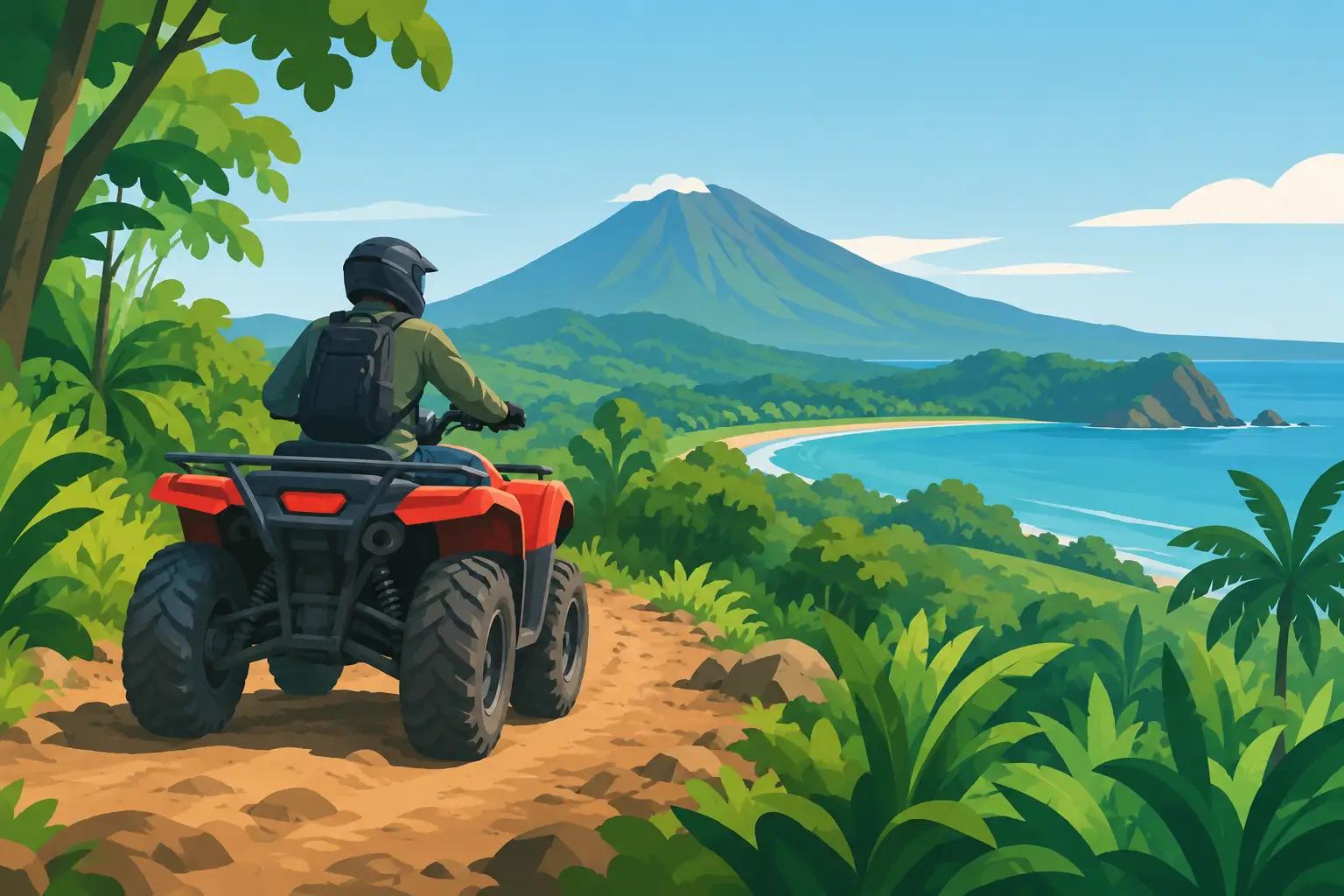
A Costa Rica ATV ride can change character in a single mile. A dry coastal track can turn slick after a tropical downpour, a river crossing may be deeper than it looked that morning, and a shortcut on a map can end at a locked gate or an unrideable hill. To navigate Costa Rica ATV trails well, treat the ride as part route planning, part weather reading, and part good local judgment.
The payoff is worth it. With the right vehicle and a realistic plan, an ATV or UTV opens up a side of Costa Rica that sits beyond resort roads: backcountry overlooks near Arenal, jungle routes outside Nosara, rural tracks around Tamarindo, and rugged approaches to beaches near Santa Teresa. The goal is not to cover the most ground. It is to ride confidently, respect the land and local communities, and get back before the adventure becomes a recovery mission.
Start With the Right Kind of Ride
The first decision is whether to book a guided tour or rent independently. Neither is automatically better. It depends on your experience, the season, and how much time you have to learn the area.
A guided ATV tour is the smarter call if you are new to off-road riding, traveling during the rainier months, or hoping to reach trails that are hard to identify without local knowledge. A strong local guide knows which routes are currently passable, where water levels rise quickly, and which viewpoints are worth the ride. Tours also remove the pressure of navigation, so you can focus on riding technique and the scenery.
An independent rental works well for experienced riders who want freedom to set their own pace. It is especially appealing in coastal areas where a short route can combine dirt roads, small towns, and scenic stops. But independent does not mean improvised. Ask the operator for a recommended route, realistic ride time, fuel guidance, and clear instructions on where you may and may not ride.
For couples, families, and groups with mixed experience levels, a UTV is often the more comfortable choice. It offers a more stable, side-by-side setup and room for passengers, while still handling unpaved terrain. A single-rider ATV delivers a more direct, active ride but demands more balance, throttle control, and attention on rough surfaces.
Build a Route You Can Actually Finish
Costa Rica is compact on a map, but its terrain makes travel slower than many visitors expect. A 15-mile route can include steep grades, washboard dirt, loose rock, mud, livestock, river crossings, and traffic through a small town. Plan for conditions, not distance.
Before leaving, confirm your turnaround time. Tropical sunsets come quickly, and riding unfamiliar dirt tracks after dark is a poor trade for one more photo stop. Build in time for swimming, viewpoints, food, wrong turns, and weather delays. If your rental has a return deadline, work backward from it rather than relying on your phone's estimated arrival time.
Download offline maps before setting out, but do not treat them as the final authority. Map apps may label a road that is private, seasonally impassable, or unsuitable for an ATV. Your operator's route advice should take priority. If a route looks significantly rougher than described, turn around early. There is no prize for forcing a vehicle through terrain that exceeds your skill level.
Know the difference between roads and trails
Not every dirt road is an open ATV route, and not every trail is legal or appropriate for motorized vehicles. Avoid protected areas, beaches with restrictions, private property, farms, and pedestrian-only paths unless you have explicit permission or your guide has confirmed access. Costa Rica's wildlife and ecosystems are a major reason people come to ride here. Keeping vehicles on approved routes protects them and helps preserve local access.
When you pass homes, horses, hikers, cyclists, or wildlife, slow down. Dust, noise, and aggressive riding can turn a welcome route into a source of conflict. A capable rider is recognizable by control, not speed.
Let the Weather Choose Your Pace
Weather is one of the biggest variables when you navigate Costa Rica ATV trails. During the drier months, routes around beach destinations may be dusty and firm, with loose gravel in corners. In wetter periods, those same tracks can develop standing water, deep ruts, slippery clay, and sudden runoff.
Check the forecast on the morning of your ride, then look at the sky throughout the day. Afternoon rain is common in many regions. If a storm is building, head back while the route is still familiar and traction is still manageable. Rain does not have to end the ride, but it should change your expectations.
On wet terrain, use smooth inputs. Brake before a turn rather than in the middle of it, keep your body relaxed, and avoid sharp throttle bursts that can spin the tires. Stay out of deep puddles when you cannot see the bottom. What appears to be shallow water may conceal a rut, rock, or soft section that can stop the vehicle abruptly.
River crossings deserve special caution. Never assume yesterday's crossing is safe today. Heavy rain upstream can change water depth and current fast. If you cannot assess the crossing confidently, wait for local advice or choose another route.
Get the Vehicle Check Right Before You Roll
Premium equipment is only useful if it is set up for you and understood before departure. At pickup, take a few minutes to walk around the vehicle with the operator. Confirm the brakes, lights, throttle response, fuel level, tire condition, and parking brake. Learn how to start it, shift it if applicable, and use reverse before you are on a narrow trail.
Wear the helmet provided, even for a short ride. Closed-toe shoes are essential. Sunglasses or eye protection help with dust and insects, while sunscreen, water, and a light rain layer cover the conditions most riders encounter. For longer routes, keep your phone charged and protected from water. Do not carry loose bags that can shift or snag while riding.
Ask what to do if you get a flat tire, stuck vehicle, mechanical issue, or route closure. A verified operator should provide a clear contact method and explain the support process. This is one of the practical advantages of booking through a platform such as Vroom8, where travelers can compare trusted local operators, vehicle options, pickup details, and cancellation terms before committing.
Ride for the Terrain, Not Your Confidence Level
If you have driven an ATV before, Costa Rica can still surprise you. The terrain is varied, and a vehicle that feels easy on flat hardpack may behave very differently on wet clay or a steep rocky descent.
On climbs, keep steady momentum and look ahead rather than down at the front tires. On descents, slow early and let the vehicle's engine braking help where available. Keep both hands on the controls and avoid coasting downhill in neutral. In turns, reduce speed before entering and look through the corner toward where you want to go.
Give the rider ahead plenty of space. Dust can hide obstacles, and close following removes your time to react. If you are traveling in a group, agree on simple stop points and never assume everyone saw the last turn. The fastest rider should not dictate the pace for the whole group.
Choose Logistics That Keep the Day Easy
The best ATV day starts before the engine does. Hotel delivery can save valuable vacation time, especially when you are staying outside a rental hub. For guided rides, hotel pickup makes it easier to arrive prepared and on time without figuring out unfamiliar transportation first.
When comparing options, look beyond the headline price. Check whether helmets, fuel, insurance options, guide services, hotel delivery or pickup, and taxes are included. Read the cancellation policy, particularly if your plans may shift with weather or travel changes. Instant booking is convenient, but clear terms are what keep a booking stress-free.
Costa Rica rewards riders who stay curious without getting careless. Pick a route that matches the day, listen when a local operator says conditions have changed, and leave enough time to enjoy the unexpected stop along the way. The best trail days are rarely the ones with the most miles. They are the ones where every turn still feels like a good decision.