
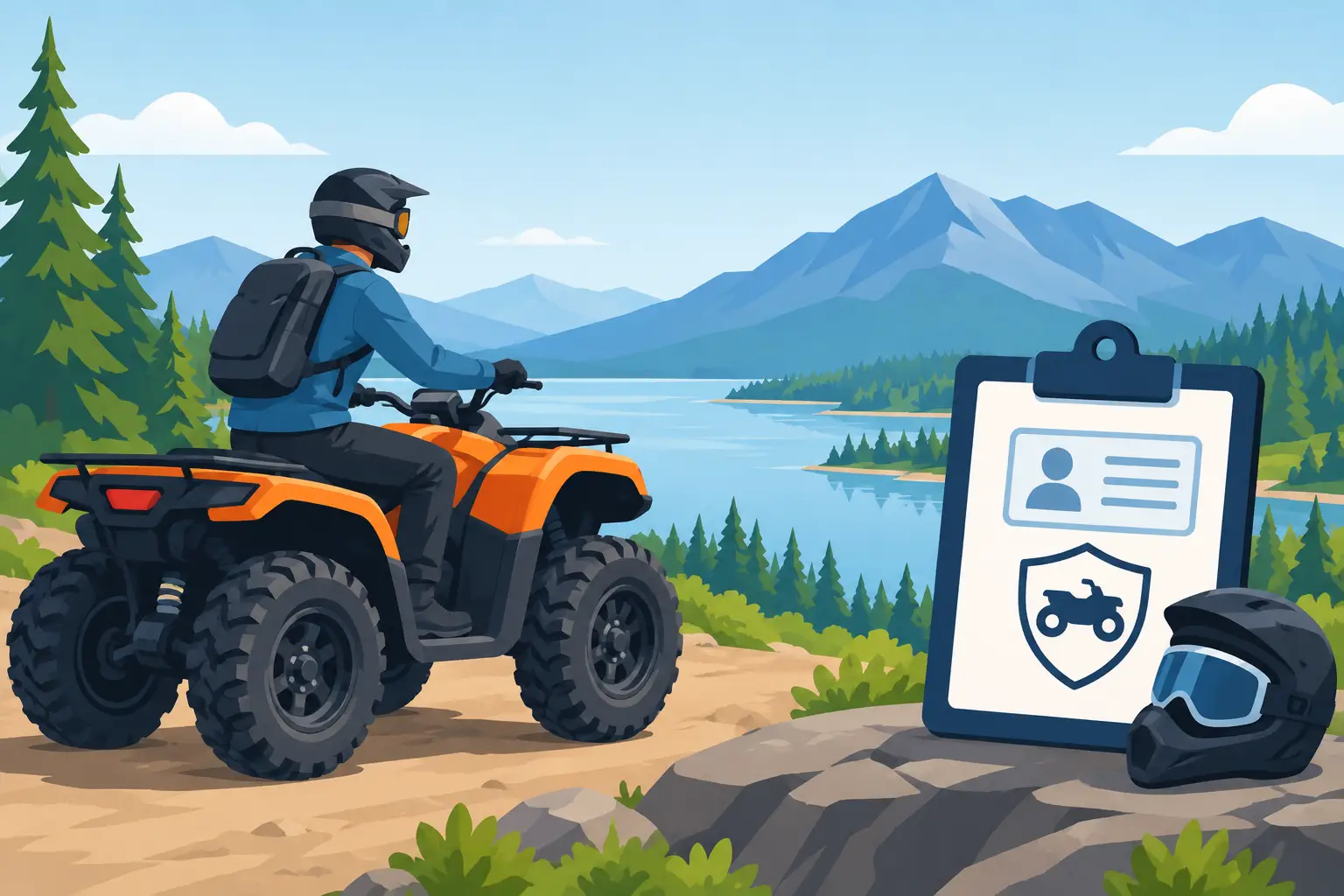
The helmet is fitted, the trail starts beyond the resort, and your group is ready to ride. Then comes the question that can change the plan: do ATVs need licenses? Usually, you will need a valid driver’s license to rent and operate an ATV independently. But whether that license must be local, whether an international permit is useful, and whether you can ride on public roads depends on the destination, the vehicle, and the operator’s policy.
For travelers, the practical answer is simple: bring your current physical driver’s license, confirm the rental requirements before booking, and never assume that an ATV can go anywhere a car can. A great off-road day is about freedom, but it starts with knowing where the rules draw the line.
Do ATVs Need Licenses for Rentals and Tours?
There is no single worldwide ATV license. In most vacation destinations, operators look for a standard, valid driver’s license from your home country when you rent an ATV or UTV for self-guided use. This shows that you are legally permitted to operate a motor vehicle and gives the operator a basic record for its rental agreement and insurance process.
That does not automatically mean your license gives you permission to ride on every road. ATVs are often classified differently from cars and motorcycles. A destination may allow them on rural streets, prohibit them on highways, or restrict their use entirely to private trails and designated routes. Local enforcement can also vary by town, resort area, and road type.
Guided tours can be different. On a trail-based ATV tour, the operator may accept riders who do not hold a driver’s license, especially when the route stays on private land and the guide controls the experience. Other tours still require every driver to be licensed, while allowing unlicensed guests to ride as passengers. Age, vehicle size, and insurance rules all affect that decision.
The booking page or operator confirmation should state the requirement clearly. If it does not, ask before you build the day around a hotel pickup or delivery.
A Driver’s License Is Not the Same as Road Permission
The biggest source of confusion is the difference between being allowed to rent an ATV and being allowed to drive it on public roads.
A rental operator might hand over a premium ATV at your hotel because you have a valid U.S., Canadian, or European driver’s license. That same operator may tell you to stay off a nearby highway, avoid a busy downtown street, or use only specified beach and jungle routes. Those instructions are not optional suggestions. They are usually tied to local vehicle classification, safety conditions, permit requirements, or insurance coverage.
Road use is particularly sensitive in popular travel areas. In Playa del Carmen or Punta Cana, traffic, pedestrians, resort entrances, and major roads can make an ATV a poor fit outside approved routes. In destinations with more rural terrain, such as Tamarindo, Nosara, or the Arenal and La Fortuna area, an ATV or UTV can be a practical way to reach scenic backroads and trail access, but local restrictions still apply.
Think of your rental as authorized for the route you have agreed to ride, not as an all-access pass to the destination. A verified local operator should explain where you can go, where you cannot, and what to do if road conditions change.
What Documents Should Travelers Bring?
For an independent ATV or UTV rental, carry your physical driver’s license, a passport or other government photo ID, and the payment card used for the security deposit if the operator requires one. A clear photo of your license on your phone may be helpful as backup, but it is rarely a substitute for the original.
An International Driving Permit can be useful when traveling in a country where your license is not written in the local language. It is a translation document, not a replacement for your home license. Bring both if you have one, particularly if you expect to drive beyond private trails or have been advised that it is required locally.
Travelers should also read the rental agreement before the keys change hands. Look for the named-driver rule, age minimum, passenger limits, fuel policy, damage deposit, terrain restrictions, and insurance exclusions. A lower daily price can become expensive if it leaves you unclear about damage coverage or prevents you from using the routes you had planned.
Age Rules Matter as Much as License Rules
A valid license is only one part of eligibility. Many ATV rental operators set a minimum driver age, often 18 or 21, and may require drivers under a certain age to have more experience or pay a larger deposit. Higher-powered machines and side-by-side UTVs may have stricter standards.
Passenger rules can be even more specific. A two-seat UTV is not automatically appropriate for two adults plus a child, and a single-rider ATV should never carry an extra passenger unless it was designed and approved for one. Children may be welcome on certain guided family tours but not on independent rentals, or they may need to meet height, age, and helmet-fit requirements.
This is one reason guided tours are a strong choice for groups with mixed experience. The operator can match the vehicle and route to the group rather than leaving first-time riders to judge unfamiliar terrain on their own.
When a Guided Tour Makes More Sense
If you are visiting for a few days, a guided ATV tour can remove much of the licensing uncertainty. You still need to meet the operator’s driver and age requirements, but you do not need to plan the route, find legal trail access, or wonder whether the next turn leads to a restricted road.
Guides also add value beyond navigation. They know when a river crossing is too deep after rain, which lookout is worth the climb, and which local route stays enjoyable rather than turning into a traffic-heavy transfer. In jungle, mountain, and coastal areas, that local knowledge can make the difference between a stressful ride and an unforgettable one.
A guided option is especially smart for first-time ATV riders, families, and travelers who want to combine the ride with waterfalls, beaches, wildlife, or local stops. Hotel pickup can keep the logistics easy, while the operator handles the equipment briefing and route plan.
Insurance, Deposits, and the Fine Print
A license may get you approved to drive, but it does not settle the question of financial responsibility. ATV rentals commonly place a hold on a credit card or collect a damage deposit. The amount can vary based on the machine, duration, and level of coverage selected.
Ask what is covered if the ATV is damaged, stolen, submerged, or driven outside approved areas. Also ask whether roadside assistance is available and what happens if you get a flat tire or mechanical issue far from the pickup point. Travel insurance may offer some protection, but many policies exclude off-road vehicles, racing, reckless use, or riding without the required license.
Take a few minutes to inspect the ATV or UTV before departure. Photograph existing scratches, tire condition, lights, mirrors, and body panels with the staff member present. It is a simple habit that supports a smooth return process.
Ride Like a Guest, Not a Local Regular
Even experienced riders need to reset their expectations in a new destination. Gravel can shift, rain can turn dirt roads slick within minutes, and local traffic may move differently than it does at home. Wear the provided helmet, use closed-toe shoes, and keep speed for conditions rather than for the thrill of the throttle.
Do not drink and ride. Avoid nighttime routes unless they are explicitly approved and you are comfortable with the terrain. Keep your phone charged, save the operator’s contact number, and respect private property, wildlife areas, and quiet residential roads.
The best ATV rentals feel independent without feeling unsupported. Bring the right documents, choose an operator that explains the rules clearly, and select the ride that fits your group’s real experience level. Then you can focus on the part you traveled for: the dusty backroads, the ocean views, and the places a standard sightseeing bus never reaches.