
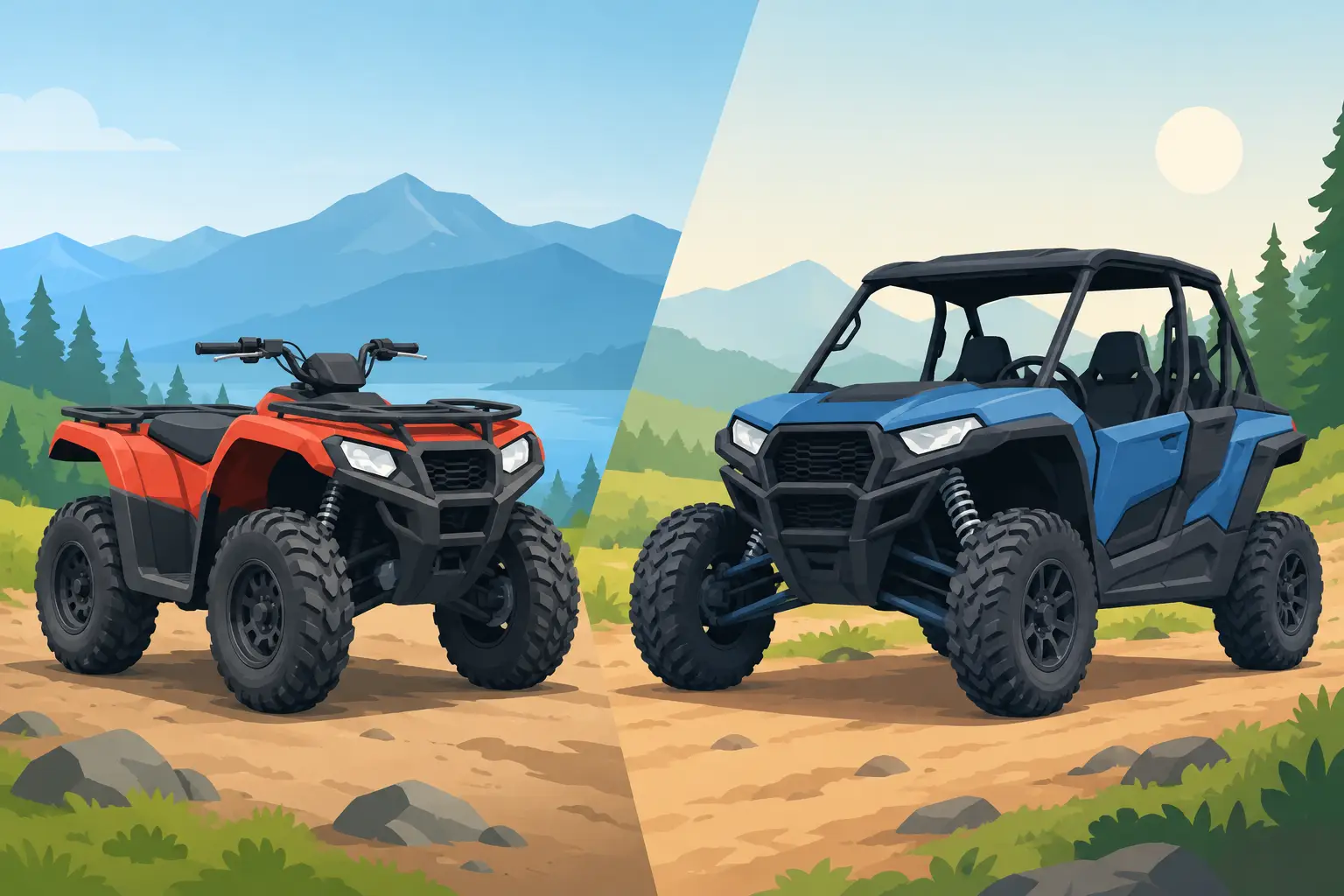
The trail outside your resort can change fast: packed dirt becomes loose gravel, a shallow creek crosses the route, and suddenly the scenic lookout feels much farther away. For ATV vs UTV beginners, the right choice is less about looking adventurous in vacation photos and more about feeling comfortable enough to enjoy every mile. One vehicle puts you in the open with direct control; the other gives your group a more protected, car-like ride.
Both can turn a beach, jungle, or mountain day into the highlight of a trip. The better fit depends on who is riding, where you are going, and whether you want to drive solo, share the experience, or let a guide handle the route.
ATV vs UTV Beginners: The Fast Answer
An ATV is usually the better choice for a confident solo rider who wants a hands-on off-road experience. You straddle the seat, steer with handlebars, and use your body position to help manage turns and uneven terrain. ATVs are typically smaller and more nimble, which makes them exciting on narrower trails.
A UTV is often the easier first choice for couples, families, and groups of friends. It has a steering wheel, pedals, seat belts, a roll cage, and side-by-side seating. Most first-time vacation riders find that familiar driving position less intimidating, especially on a guided tour or a route with rougher sections.
That does not mean a UTV requires no skill, or that every ATV is difficult to ride. Vehicle size, terrain, weather, operator rules, and your own comfort level all matter. But if you are booking your first off-road experience and want the lowest learning curve, start by looking at UTV options.
What Riding an ATV Actually Feels Like
An ATV gives you a closer connection to the trail. Your legs and arms are actively involved, and you will shift your weight slightly as the surface changes. On a dry, open path, that can feel energetic and intuitive. On rutted ground, mud, or sharp turns, it asks more of your attention.
For a beginner, the key is that ATVs respond differently from a car. You do not just sit back and turn the wheel. You look through the corner, ease off the throttle before the turn, and avoid sudden steering inputs. A quality rental operator will explain braking, throttle control, turning, and safe body position before you leave.
ATVs work well when you want independence and the route suits a single rider. They can also be a strong option for a couple if each person wants to drive their own vehicle. In a destination like Tamarindo or Playa del Carmen, an ATV can be a fun fit for guided backroad routes where the goal is the ride itself as much as the destination.
The trade-off is exposure. You are more exposed to dust, rain, sun, trail splash, and branches than you would be in a UTV. You also need to be comfortable maintaining your balance and following instructions closely. If that sounds like a thrill rather than a drawback, an ATV may be exactly what you want.
Why UTVs Feel More Approachable
A UTV, sometimes called a side-by-side, feels familiar from the moment you sit down. You buckle a seat belt, hold a steering wheel, use pedals, and ride beside your passenger instead of behind them. That layout makes conversation easier and lets less confident riders share the adventure without needing to operate a vehicle themselves.
The roll cage and seating position can add peace of mind, particularly for travelers with kids or friends who have never ridden off-road. UTVs also commonly have more room for water, a small bag, and personal items. Availability varies by operator, but many models offer enough passenger capacity to keep a small group together.
Their size is both an advantage and a limitation. A UTV can feel more stable and planted over uneven ground, yet it may not fit on trails intended for narrower vehicles. It can also be more expensive than an ATV because of its capacity and features. For a couple splitting the cost, though, it can be excellent value compared with booking two separate ATVs.
A UTV is often the smart choice for a first outing around Arenal or La Fortuna, where changing terrain and scenic routes can make comfort especially valuable. You still get mud, views, and the rush of being outside the usual tourist route, but with a setup that feels more forgiving.
Match the Vehicle to Your Group and Route
Start with the people in your booking, not the vehicle photo. A solo traveler who has ridden motorcycles or dirt bikes may prefer an ATV. A couple celebrating a getaway may choose a two-seat UTV so both can take in the view. Families should look closely at passenger limits, minimum age requirements, and whether children are allowed on the specific tour or rental route.
Next, consider whether you want a guided tour or a self-guided rental. A guide is a strong first-time option if you are unfamiliar with local roads, weather patterns, or trail conditions. The guide sets the pace, gives you a safety briefing, and handles navigation so you can focus on the ride. This is especially useful when a route includes water crossings, steep sections, or areas where road rules may differ from home.
Self-guided rentals offer more freedom, but they require more planning. Ask where you are permitted to drive, whether the vehicle is road legal, what fuel is included, and what happens if weather changes the route. In beach and jungle destinations, an afternoon storm can turn an easy dirt road into a slippery surface quickly.
Hotel delivery can make the decision simpler. Rather than figuring out transportation to a rental shop, you can arrange to start near your accommodation when the operator offers that service. For guided outings, hotel pickup may also save time and remove one more moving part from your day.
Safety Is the Part That Makes the Fun Last
Choose a verified operator that takes the briefing seriously. Premium equipment and a polished booking process matter, but the best signal is an operator who checks that you understand the vehicle before you head out. You should know how to start and stop, reverse if applicable, brake smoothly, park safely, and what to do if you get separated from the group.
Wear the gear provided, especially your helmet. Closed-toe shoes are the practical choice, and sunglasses or goggles can make dusty routes far more comfortable. Bring sunscreen, water, and clothing that can handle dirt or mud. A swimsuit may make sense for a tour with a waterfall or beach stop, but it is not a substitute for secure riding clothes.
Avoid treating an ATV or UTV like a high-speed attraction. The best rides are controlled rides. Keep a safe following distance, slow down before corners, and never assume a blind turn is clear. If you are on public roads, follow local traffic laws and the operator's instructions. Alcohol and off-road vehicles do not mix, even if the trail looks empty.
Weather deserves extra respect. Rain can make a route more dramatic and more technical at the same time. Beginners should tell the operator if they are uneasy about muddy terrain rather than trying to push through. A reputable team can recommend a gentler route, a UTV, a guide, or a different departure time.
Questions to Ask Before You Book
Before reserving, confirm whether the posted price is per vehicle or per person, how many passengers the vehicle is approved for, and whether damage coverage or a security deposit applies. Ask about the driver's license requirement and minimum age, because these policies vary by country and operator.
Also check the practical details: rental duration, fuel policy, pickup location, route restrictions, and cancellation terms. If a listing offers free cancellation, understand the cutoff time rather than assuming every change is refundable. These details are not glamorous, but they are what keep a spontaneous adventure from becoming a frustrating vacation expense.
When comparing options, look beyond the lowest price. A well-maintained vehicle, clear instructions, five-star guest feedback, and responsive local support can be worth more than saving a small amount on a ride that feels uncertain. Vroom8 helps travelers compare verified operators, vehicle features, availability, and booking arrangements in one place.
Choose the Ride You Will Enjoy, Not the One That Looks Toughest
Pick an ATV if you want a more physical, solo-forward ride and feel ready to learn the fundamentals. Pick a UTV if you value side-by-side comfort, passenger space, and a familiar driving setup. Either way, give yourself permission to choose the easier first step. The best off-road day is the one where you return dusty, energized, and already talking about where to ride next.