
A route that looks easy in a vacation photo can turn demanding fast after a tropical rainstorm. That is why ATV trail difficulty ratings matter before you book: they help you match the terrain, vehicle, and pace to the kind of ride you actually want. For a first-time rider, the right rating can mean a scenic jungle escape. The wrong one can mean white-knuckle ruts, a stalled climb, and less time enjoying the destination.
Trail ratings are not a test of bravery. They are a planning tool. Use them to decide whether an independent ATV or UTV rental fits your experience, or whether a guided tour is the better call for local terrain you have never ridden before.
What ATV Trail Difficulty Ratings Actually Tell You
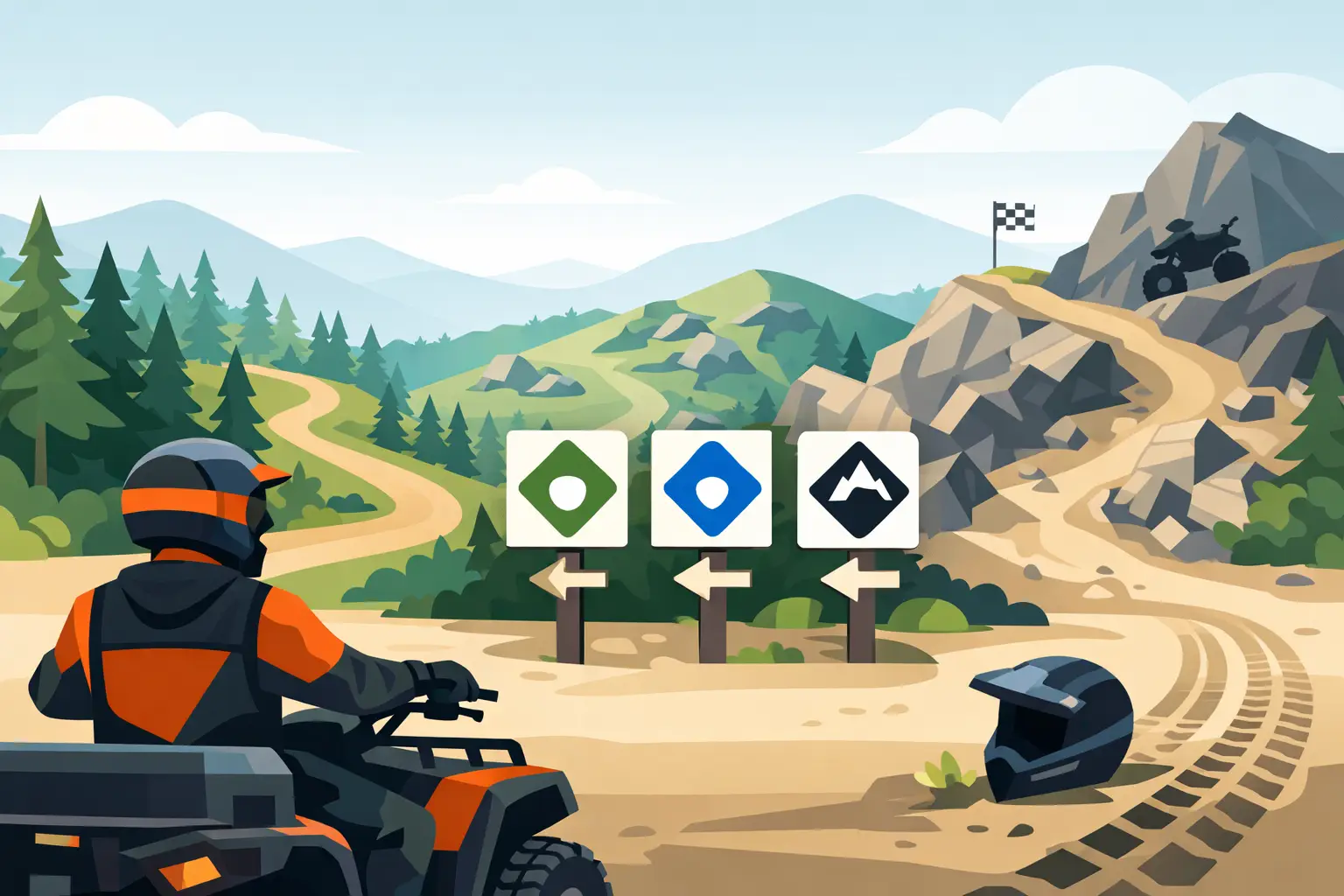
Most trail systems use a color-based scale similar to skiing: green for easy, blue for moderate, and black for difficult. Some operators use numbers, labels such as beginner or advanced, or their own route descriptions instead. There is no single worldwide standard, so a blue trail in one destination may feel very different from a blue trail somewhere else.
A rating usually reflects a mix of factors: surface condition, slope, width, obstacles, exposure, navigation demands, and how much control the rider needs. A hard-packed dirt road with gentle turns may be rated easy, while a narrow, rocky trail with steep switchbacks may be advanced even if it is only a few miles long.
The rating does not always tell the whole story. Weather can change the difficulty more than any sign at the trailhead. Loose sand becomes deep and unpredictable, a shallow stream crossing can rise, and clay-rich dirt can turn slick enough to challenge experienced riders. Ask about current conditions, not only the posted rating.
Easy trails: green or beginner
Easy ATV routes are built for relaxed exploration. Expect wider paths, mild grades, open sightlines, manageable turns, and relatively stable surfaces. There may still be bumps, puddles, dust, or shallow mud - this is off-road riding, after all - but the route should not demand constant technical decisions.
These trails suit first-time riders, couples looking for a scenic activity, families riding in a side-by-side UTV, and travelers who want to focus on beaches, viewpoints, forest roads, or local stops rather than difficult terrain. A guided beginner tour is also a smart first ride if you are unfamiliar with throttle control, braking on loose ground, or local road rules.
Easy does not mean careless. Keep both hands on the controls, leave extra stopping distance on gravel, and slow down before turns. The most common beginner mistake is carrying road speed onto a surface with far less grip.
Moderate trails: blue or intermediate
Moderate routes add variety and require more active riding. You may encounter uneven ground, washboard sections, tighter corners, moderate climbs and descents, loose gravel, sand, ruts, or mud. The trail may be narrower, and the best line through an obstacle may not be obvious at first glance.
A moderate rating is often the sweet spot for travelers who have ridden before or who want a real off-road experience without committing to highly technical terrain. It can also work for confident beginners on a guided outing, especially when the guide controls the pace and explains how to approach hills, water, and rough patches.
On these trails, momentum and restraint both matter. Too little momentum can leave an ATV bogged in soft terrain, while too much can make it difficult to correct your line. Stand slightly on the footrests when appropriate, look ahead rather than at the front tires, and use smooth throttle inputs. If that sounds unfamiliar, choose an easier route or a tour with instruction.
Difficult trails: black or advanced
Difficult trails are for riders with established off-road skills and the judgment to turn around when conditions are wrong. Expect steep or off-camber slopes, larger rocks, deep ruts, ledges, technical descents, narrow corridors, water crossings, dense mud, or terrain where a mistake has bigger consequences.
These routes can be outstanding, but they demand more than confidence. Riders need to understand body positioning, controlled braking, traction management, recovery basics, and the limits of the specific ATV or UTV they are operating. A premium vehicle may offer stronger suspension or four-wheel drive, but equipment does not erase the need for experience.
If an operator describes a route as advanced, believe them. Vacation riding is not the place to prove you can handle a trail you have never seen. Choose a guided advanced tour only when your prior experience supports it, and be honest when asked about your riding background.
Why the Same Rating Can Feel Different on Vacation
Destination terrain changes the equation. In Playa del Carmen or Punta Cana, sandy ground, shallow water, and changing weather can make a route feel more physical than its elevation suggests. Around Tamarindo, Nosara, or Santa Teresa, dry-season dust and loose gravel may give way to muddy, rutted tracks after rain. Near Arenal and La Fortuna, elevation, rainforest moisture, and uneven volcanic terrain can add another layer of challenge.
Vehicle choice matters just as much. A solo ATV is agile and engaging, but it asks more of the rider because you manage balance, steering, and body position. A UTV provides a steering wheel, seats, seat belts, and more passenger capacity, making it a practical option for families, groups, and travelers who prefer stability. That said, a UTV can still feel demanding on narrow, deeply rutted, or steep terrain.
Your passenger changes the rating, too. Carrying someone behind you affects braking distance, handling, and traction. A route that is comfortable solo may be less suitable with a passenger, especially if neither of you has ridden off-road before. Confirm the vehicle's passenger rules and weight limits before booking.
How to Choose the Right Trail for Your Group
Start with the least experienced rider, not the most adventurous person in the group. If one friend has never used an ATV and another rides every weekend, a moderate independent route may frustrate one and overwhelm the other. A guided excursion with a measured pace is often the better shared experience.
When comparing rentals or tours, ask direct questions about the route rather than relying on labels alone. Find out whether the ride includes steep hills, deep mud, paved-road sections, water crossings, narrow trails, or sustained high-speed areas. Ask how recent rain has affected the route and whether the operator can offer an easier alternative on the day.
Also clarify the practical details that influence comfort and safety. Confirm the vehicle type, whether helmets are included, what instruction is provided, how long the actual riding portion lasts, and whether hotel pickup or delivery is available. Verified operators who describe their route and vehicle requirements clearly are giving you useful information, not trying to make the adventure sound less exciting.
For independent rentals, plan the route before you start the engine. Know where you are allowed to ride, how far you can travel, where fuel is available, and what to do if weather changes. Bookings that include clear pickup instructions, responsive local support, and flexible cancellation options provide more room to adapt when trail conditions do not match the plan.
Read the Trail, Not Just the Sign
Once you arrive, keep reassessing. A green route can become moderate after heavy rain, and an intermediate climb may be easy for the first half before deteriorating near the top. Pause before an obstacle that looks beyond your comfort level. Look for a safer line, wait for your guide's direction, or turn back.
Never assume a trail is safe because other tire tracks are visible. Those tracks may belong to a more capable vehicle, a local rider who knows the route, or someone who had a difficult time getting through. Ride within your visibility, avoid sudden braking in turns, and give the vehicle ahead enough space that you can react to mud, dust, or an unexpected stop.
A great off-road day is not measured by the hardest trail you attempt. It is the ride where the terrain feels exciting, the vehicle feels right, and everyone returns with photos, stories, and enough energy to enjoy the rest of the trip. Compare routes carefully, choose a verified operator through Vroom8 when you want a trusted booking experience, and let the trail rating guide you toward the adventure you will actually enjoy.