
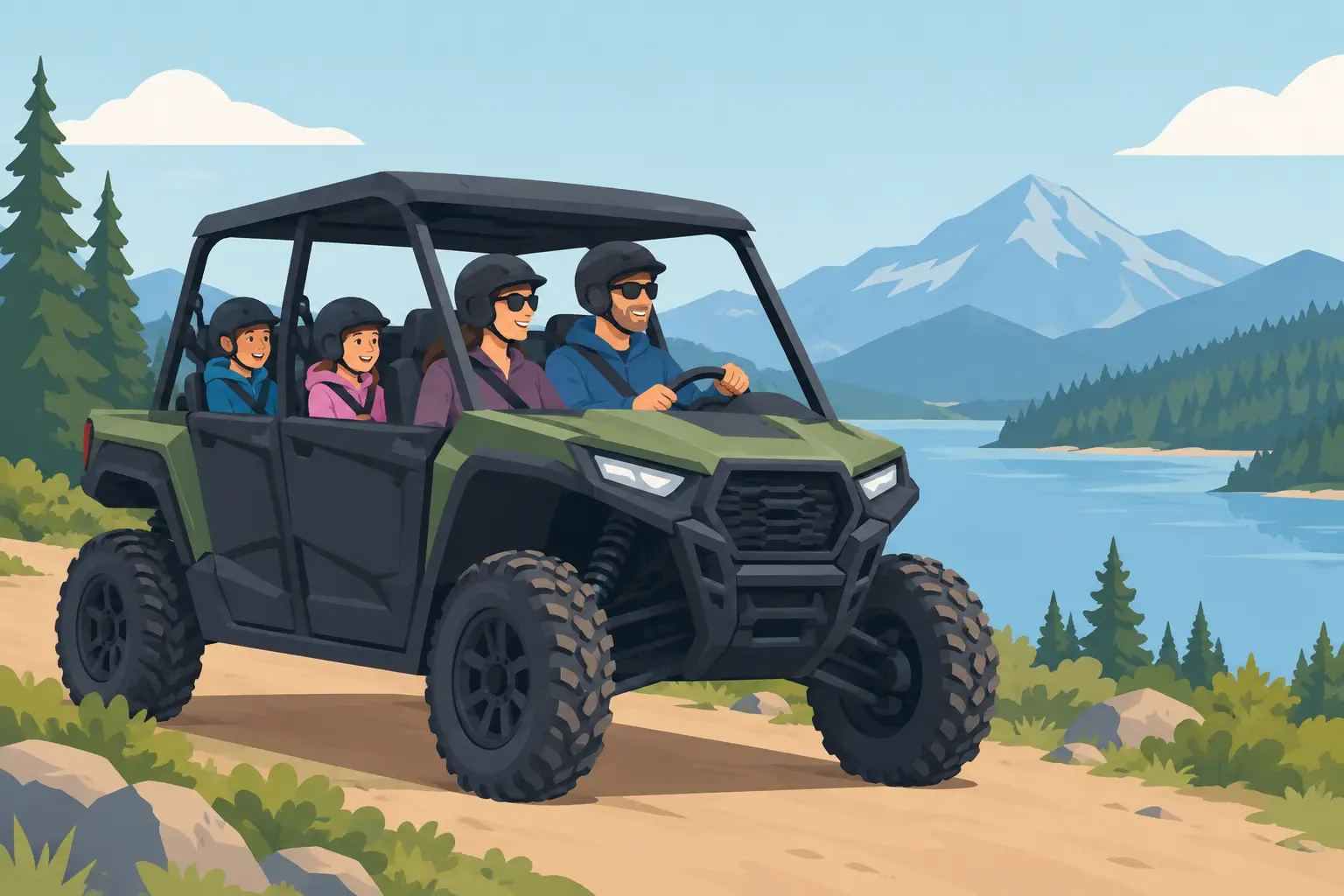
A family UTV ride can turn a resort day into a real adventure: jungle roads outside La Fortuna, open coastal views near Tamarindo, or a guided route beyond Playa del Carmen. But parents are right to ask, are UTVs safe for families? The honest answer is that they can be, provided the vehicle, operator, riders, route, and driving behavior are a good match. A UTV is not a casual golf cart. It is a motorized off-road vehicle that deserves the same planning you would give any high-energy travel activity.
The safest family experience usually starts with a simple decision: choose a properly equipped side-by-side with seat belts, a rollover protection structure, and enough real seats for every passenger. Then make the ride fit the least experienced and youngest person in your group, not the most adventurous adult.
Are UTVs Safe for Families on Vacation?
UTVs, also called side-by-sides, are generally a better family option than single-rider ATVs because passengers sit beside one another in enclosed seating positions and use individual restraints. Most family-oriented models have a steering wheel, foot pedals, a roll cage or rollover protection structure, and bench or bucket seats. That design can offer more stability and passenger security than a vehicle where riders straddle a seat.
Still, “safer” does not mean risk-free. UTV incidents can happen when drivers take corners too quickly, ride on terrain beyond their ability, skip seat belts, carry more people than the vehicle is designed for, or allow children to ride where they cannot be safely restrained. Uneven trails, water crossings, changing weather, and unfamiliar local traffic rules add another layer when you are traveling.
For families, a guided UTV tour is often the smartest first choice. A good guide knows which routes are appropriate after rain, where visibility is limited, how to pace a group, and when a section of trail is not suitable for a vehicle full of passengers. Independent rentals can be a great fit too, but only for drivers comfortable with the route, local conditions, and the responsibility of managing the ride themselves.
Start With the Right UTV, Not the Fastest One
A premium-looking vehicle is not automatically the right vehicle for your family. Ask the operator about the specific model, passenger capacity, safety features, and age or height requirements before booking. “Four-seat” and “six-seat” labels matter only if every rider has an actual seat and a working belt. Never plan to hold a child on an adult’s lap or squeeze an extra passenger into a cargo area.
Children should be able to sit upright with their back against the seat, keep their feet where the vehicle manufacturer intends, and wear the restraint correctly. If the shoulder belt crosses the neck, the lap belt rides up on the stomach, or the child cannot remain seated properly throughout the trip, they are not ready for that vehicle. A booster seat is not a universal answer in off-road vehicles. Use one only when the operator and vehicle guidance explicitly allow it and the seat can be securely installed.
Age rules are not just paperwork. Operators may set a minimum passenger age based on local regulations, insurance requirements, trail conditions, and the UTV’s restraint system. Respect those rules, even if your child has ridden in off-road vehicles before. The conditions on a vacation trail may be very different from a familiar ride at home.
Four features worth confirming
Before committing to a rental or tour, confirm that the UTV has a rollover protection structure, individual seat belts for every passenger, secure doors or side nets, and well-maintained tires and brakes. Helmets are strongly recommended and may be required, depending on the destination and route.
For younger passengers, full-face helmets in the correct size can be particularly useful. A loose helmet does not protect well, and an adult helmet on a small child can obstruct vision and shift during a bumpy ride. Goggles or eye protection also make a major difference on dusty roads.
Choose the Route Around Your Family’s Ability
A gentle scenic route can be an excellent family outing. Deep mud, steep descents, fast open stretches, and technical rock sections are a different product entirely. When comparing options, ask what the route is actually like rather than relying on photos alone.
Useful questions include whether the ride uses public roads, whether there are water crossings, how long passengers will be seated, what happens during heavy rain, and whether drivers can take turns. A two-hour tour may sound short, but it can feel long for a young child in heat, dust, or tropical humidity. Build in a bathroom stop, water, sunscreen, and a realistic expectation of your family’s comfort level.
In destinations with seasonal rains, trail conditions can change quickly. A route that is family-friendly in the morning may be slick or rutted after an afternoon storm. This is one reason verified local operators and experienced guides are valuable: they can adjust the route rather than forcing a planned itinerary when conditions no longer support it.
The Driver Sets the Safety Standard
The UTV’s safety equipment works only when the driver uses it correctly. The most important rule is simple: every passenger buckles up before the engine starts and stays buckled until the vehicle is parked. No exceptions for quick photo stops, slow sections, or short transfers.
Drive at a pace that allows you to react to ruts, animals, pedestrians, and oncoming vehicles. Reduce speed before turns, hills, bridges, water, and blind corners. Avoid hard acceleration with passengers aboard, and keep both hands on the wheel when the terrain gets rough. Off-road confidence is not the same as good judgment. The best driver on a family ride is calm, alert, and willing to slow down.
Alcohol, recreational drugs, and UTV driving do not mix. This includes “just one drink” at lunch before heading back to the hotel. Heat and dehydration can also affect focus, so carry water and take breaks before fatigue turns into poor decisions.
Give kids a clear passenger briefing
Children enjoy an adventure more when they know what to expect. Before departure, explain that hands, arms, and feet stay inside the vehicle; belts stay fastened; and they should tell an adult if they feel scared, sick, too hot, or uncomfortable. Remind them not to distract the driver on rough terrain.
It also helps to set expectations about speed. Tell them the goal is to see great places safely, not to make the ride feel like a theme-park attraction. That framing can prevent pressure on the driver to go faster than conditions allow.
How to Vet a Family-Friendly Operator
On vacation, the quality of the operator is part of the safety equation. Look for a provider that gives clear pre-ride instructions, checks licenses where required, explains damage policies without pressure, and takes time to inspect the vehicle before handing it over. You should be shown how the belts, doors or nets, brakes, lights, reverse gear, and parking brake work.
A responsible operator will ask about your group, not simply accept a booking without questions. They should be upfront if a young child cannot participate, if a route has demanding terrain, or if weather requires a change of plan. That transparency is a service feature, not an inconvenience.
For guided tours, notice whether the group size and guide-to-vehicle ratio feel manageable. Ask if there is a support vehicle or a procedure for mechanical problems. For independent rentals, clarify roadside assistance, permitted riding areas, hotel delivery arrangements, fuel expectations, and what to do if rain changes your plans. Platforms such as Vroom8 can make this screening easier by helping travelers compare verified operators, vehicle details, and booking terms before they arrive.
When a UTV Is Not the Right Family Activity
Skip the ride if a passenger is below the operator’s minimum age or cannot use the restraint system properly. Consider another activity if anyone has a neck, back, or medical condition that could be aggravated by vibration and sudden movement. Pregnant travelers should seek guidance from their health care professional and follow the operator’s restrictions.
It may also be wise to choose a calmer excursion if your child is anxious around loud engines, strongly prone to motion sickness, or already overtired from travel. There is no prize for pushing through discomfort. A beach day, wildlife boat trip, or private driver route may create a better family memory than a ride that overwhelms someone in the group.
A well-chosen UTV outing gives families something rare on vacation: shared access to places that feel beyond the resort gate. Choose the right seats, the right route, and an operator willing to put safety ahead of speed, and the adventure can feel exciting for the kids while giving the adults genuine peace of mind.