
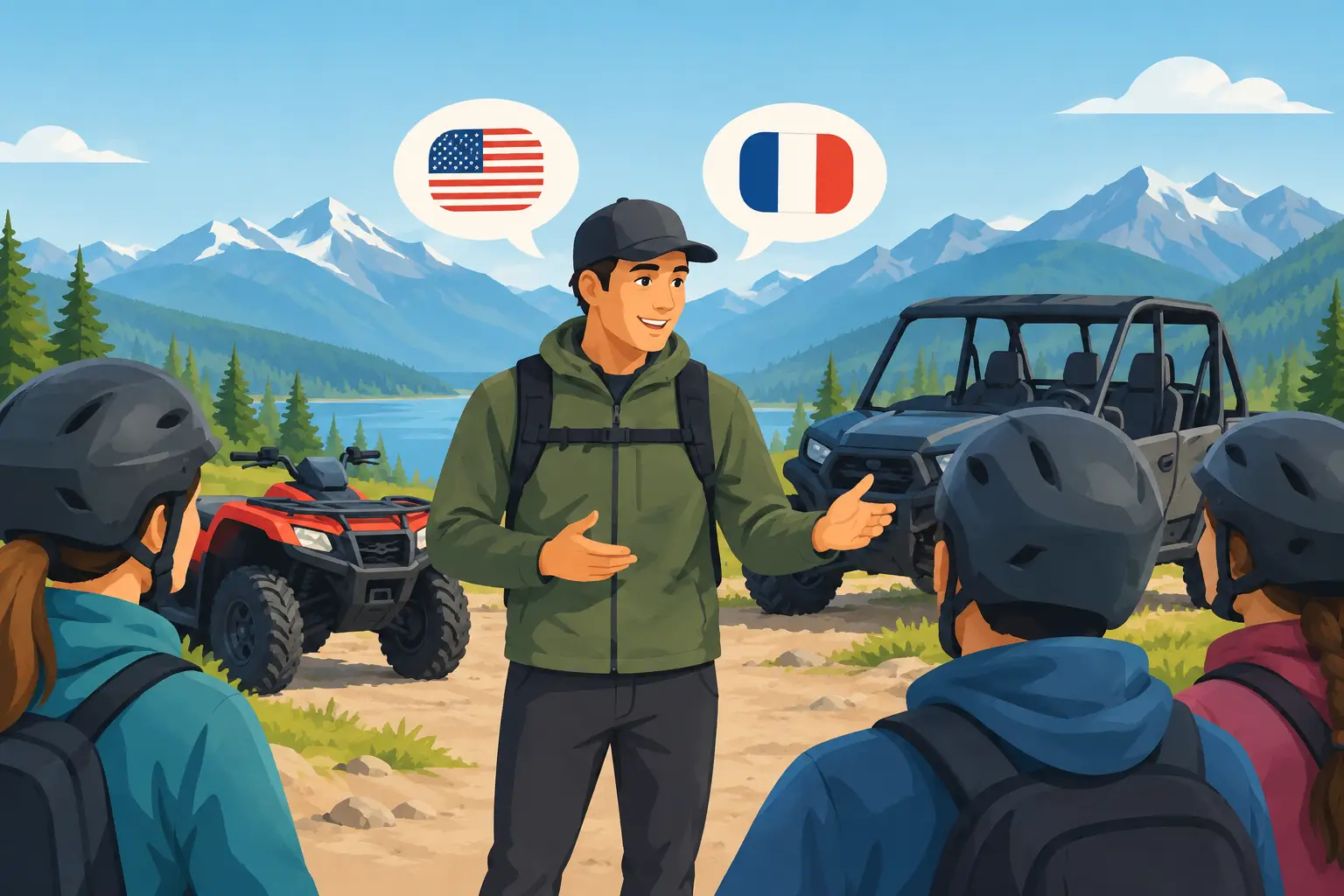
A jungle trail is no place to guess what your guide just said. Before the helmets go on and the engines start, travelers often ask one practical question: Are guides bilingual on ATV and UTV tours? The honest answer is that it depends on the operator, destination, and tour format. Many guides working with international visitors speak English and Spanish, while others have conversational English but conduct more detailed explanations in their native language.
For a great off-road day, language matters for more than trail stories. It affects the safety briefing, driving instructions, regrouping points, weather decisions, and the confidence to speak up when something does not feel right. A bilingual guide can make an unfamiliar route feel far more relaxed, especially for first-time riders, families, and groups with mixed riding experience.
Are guides bilingual on every off-road tour?
No. Bilingual service is common in tourism-driven areas, but it should never be assumed. In destinations such as Tamarindo, Arenal and La Fortuna, Nosara, Punta Cana, and Playa del Carmen, established ATV and UTV operators regularly welcome English-speaking travelers. That often means guides can explain the basics in English, answer questions, and lead the ride with clear signals.
But “English-speaking” and “fully bilingual” are not always the same thing. A guide may be excellent at communicating the route, safety rules, and vehicle controls in English without being able to offer a detailed historical or ecological narration. Another guide may be fully fluent but assigned to a Spanish-speaking group that day. Tour schedules, group size, seasonality, and staffing all influence what is available.
The strongest operators set expectations before you arrive. They clearly state the tour language, confirm whether an English-speaking guide is included, and explain how the safety briefing will be delivered. If language support is a priority, ask before booking rather than hoping it will work out at pickup.
Why language is a safety feature, not a bonus
Guided off-road tours move through changing conditions. You may ride dusty backroads, shallow river crossings, jungle tracks, beach access roads, or steep terrain depending on the destination and season. Your guide needs to communicate when to slow down, how much following distance to leave, where to park, and what to do if a vehicle has an issue.
A clear briefing should cover how to start and stop the ATV or UTV, use the brakes, handle turns, follow hand signals, and stay within the group. It should also explain the rules around helmets, seat belts, passengers, alcohol, wildlife, private property, and road crossings. If any part of that briefing is unclear, pause and ask for clarification before leaving.
Language is especially valuable when conditions change. Tropical rain can alter a trail quickly. A guide may need to reroute the group, explain why a crossing is closed, or tell riders how to navigate slick ground. Simple hand signals help while engines are running, but they do not replace a briefing everyone understands.
For this reason, a smaller group with a guide who communicates clearly can be a better choice than a larger, lower-priced tour where instructions are rushed. The ride is about freedom, but good guiding keeps that freedom organized.
Bilingual guides also improve the local experience
Safety comes first, but a shared language makes the stops more meaningful too. A guide may point out howler monkeys in the trees, explain a local farming area, recommend a beachside lunch stop, or share the story behind a viewpoint. On a scenic route near La Fortuna, for example, a guide who can answer questions in English adds context to the volcano landscapes and rural roads around you.
That said, do not rule out a tour because the guide is not perfectly fluent. An experienced local guide with strong route knowledge, clear safety habits, and a friendly approach can still deliver an exceptional day. The key is matching the language level to what you need. If you mainly want a well-run ride and understand basic instructions, conversational English may be plenty. If you want in-depth commentary or are traveling with young children, request a fully bilingual guide.
What to ask before you book
A quick message can prevent a mismatch. Ask whether the guide speaks English fluently or whether the tour is led in another language with English instructions. Then ask whether the safety briefing is available in English. These are related questions, but not identical ones.
It also helps to confirm whether your group will be private or mixed with other travelers. A private tour often gives you more flexibility to ask questions, adjust the pace, and request an English-speaking guide when available. On a shared tour, the operator may use the language that works for most guests or provide instructions in more than one language.
If you are booking for a group, share the details upfront. Let the operator know how many people are riding, whether anyone is a first-time driver, and whether children will be passengers where permitted. Mention any guest who is nervous about driving or does not speak English well. Good operators use that information to recommend the right vehicle, route, and guide setup.
When comparing tours, look beyond the language claim. Confirm the meeting point or hotel pickup, total ride time, vehicle type, required license or age rules, damage deposit, weather policy, and cancellation terms. Clear communication before the ride is usually a good sign of how the experience will be managed on the trail.
Guided tours versus independent rentals
The language question changes when you choose a rental instead of a guided tour. With an independent ATV, UTV, or motorcycle rental, you may receive a shorter orientation rather than continuous guidance. You need to understand vehicle operation, local driving rules, fuel expectations, route limits, and what to do if you need assistance.
For travelers who want complete freedom, an independent rental can be ideal. Hotel delivery can save time, and you can set your own pace between beaches, viewpoints, and restaurants. But it also places more responsibility on the rider. If you are unfamiliar with the area, new to off-road vehicles, or unsure about local road conditions, a guided tour offers more support.
A guided ride is usually the better first choice when you want to reach remote trails without managing navigation. It can also be the smarter option during rainy periods, when terrain knowledge matters most. If you prefer to rent independently, choose a verified operator that provides a clear English orientation and a reliable way to get help during your rental period.
How to make communication easy on the day
Arrive early enough to hear the full briefing without feeling rushed. Wear the gear provided, listen before taking photos, and ask questions while the vehicle is still parked. A simple phrase such as “Can you show me that once more?” is better than nodding along and trying to figure it out on the first turn.
Keep your phone charged, but do not rely on translation apps while riding. Dust, rain, poor signal, and engine noise make them impractical once the group is moving. Instead, learn the guide’s basic hand signals: stop, slow down, single-file, hazard, and follow. Make sure everyone in your party knows the meeting plan if the group becomes separated.
If language is essential to your experience, book with that requirement stated in writing. Vroom8 helps travelers compare premium rides and verified local operators, but availability for a specific guide language can still vary by date. A confirmation from the operator gives you the clearest expectation.
The best tour begins with a guide you can understand and ends with the confidence that you explored somewhere few standard excursions reach. Ask the language question early, choose the right format for your group, and you can focus on the part that matters once the trail opens up: the ride ahead.